



How Do Covers Protect Buildings During Transport?
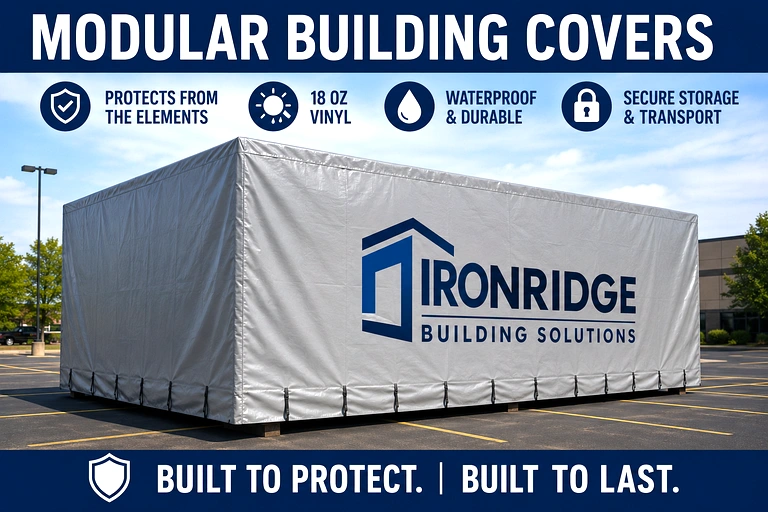
A fitted cover keeps wind and road spray off the building and stays secured to the load, unlike loose tarps that work free and tear at motorway speeds.
Modular units travel by lorry, often part-built or fully finished. Anything on that vehicle has to be held firm: official load securing guidance makes clear that everything carried must be secure for the whole journey.
Loose or poorly fixed sheeting works against that. A tarp that flaps free can become a hazard to other road users and leaves the building exposed at the worst possible moment. A purpose-made cover is shaped to the unit, fixed at set points, and built to stay put rather than balloon in the wind.


Protection in Transit and on Site

Why Do Modular and Portable Buildings Need Covers?
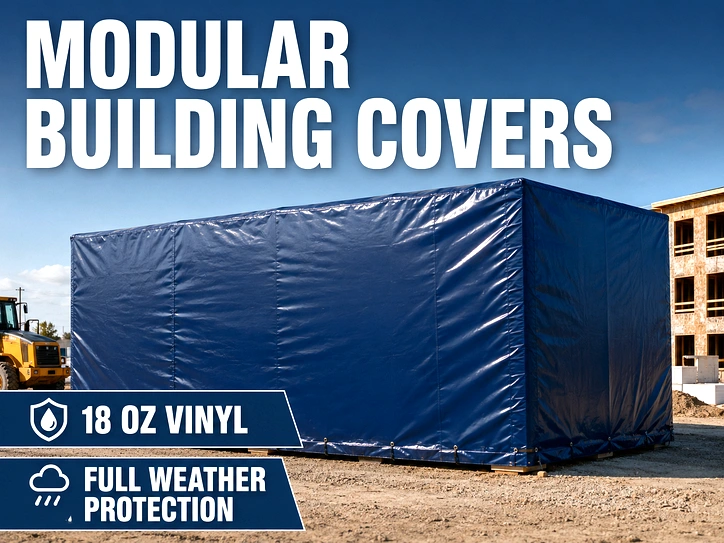
Because they leave the factory fully finished, their roofs, cladding, and interiors are exposed from the first minute. A cover protects that finished quality through transport, lifting, and on-site storage.
Rain is the main threat. Water finds roof joints, seams, and service penetrations, then tracks inside and marks ceilings, flooring, and fittings. A small leak during storage can turn a ready-to-use unit into a repair job.
Wind, UV, and knocks add to the risk. Sun fades cladding and dries out seals. Wind drives rain sideways and lifts anything loose. Lifting and manoeuvring on site can scuff corners and panels. A fitted cover takes the brunt instead of the building.

Specification at a Glance

Covers for Modular and Portable Buildings
Photo Gallery




Contains: BlogPosting + Person + FAQPage + Organization JSON-LD.
Visible in editor only. Do not duplicate or edit manually.
About the Author
Scott Fullerton is the Operations Manager at AKON Curtains. With over 15 years of experience in industrial curtain and cover solutions, Scott oversees product development, technical specifications, and operations across the UK and Ireland. He helps customers choose the right covers and curtains for their sites and facilities. Connect with Scott on LinkedIn.