Choosing the correct specification for your PVC strip curtain is crucial for balancing environmental control (keeping heat in and weather out) with ease of passage for pedestrians or vehicles.
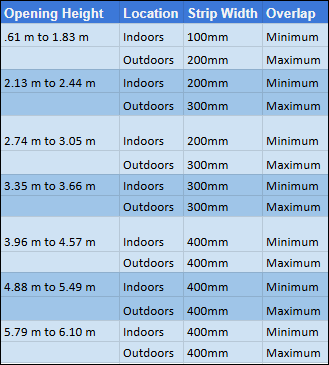
The specification is determined by two main factors: the Strip Width (measured in mm) and the Overlap Configuration (Minimum or Maximum). Here is a step-by-step guide to selecting the right curtain for your doorway.
Step 1: Choosing the Strip Width
Strip width usually correlates to the height of the doorway and the type of traffic passing through it. The narrower the strip, the easier it is to push aside; the wider the strip, the heavier and more resistant to wind it becomes.
There are three standard widths commonly used:
200mm Wide Strips (Light Duty)
- Best for: Internal pedestrian doorways, small stockroom openings, or conveyor belt openings.
- Door Height: Typically for doors up to 2.5 metres high.
- Why: These strips are lightweight and easy for people to walk through without resistance, yet they still provide a barrier against dust and drafts.
300mm Wide Strips (Medium Duty)
- Best for: The industry standard for most warehouse and commercial applications. Suitable for mixed traffic (pedestrians and pallet trucks) and external doorways.
- Door Height: Typically for doors between 2.5 metres and 4.5 metres high.
- Why: Offers a strong balance between durability against wind/weather and ease of passage for light machinery.
400mm Wide Strips (Heavy Duty)
- Best for: Large industrial openings, heavy forklift traffic, or very tall external doorways subject to high winds.
- Door Height: Typically for doors over 4.5 metres high.
- Why: Their significant weight helps them hang straight in breezy conditions and withstand impacts from heavy vehicles.
Step 2: Understanding Overlap (Minimum vs. Maximum)
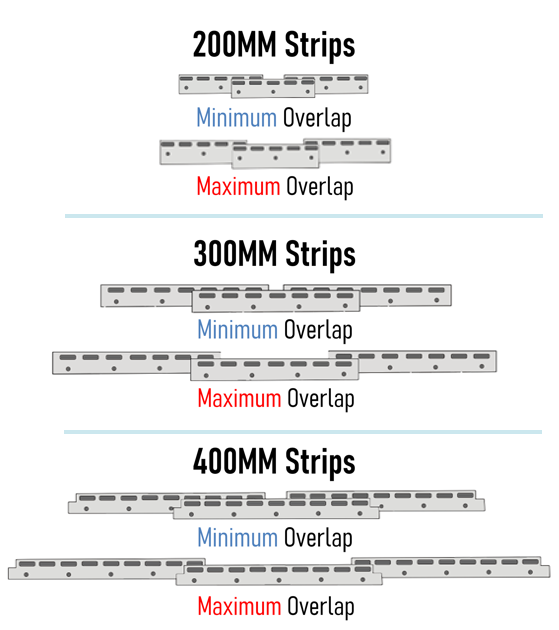
The amount of overlap is determined by how many "hooks" you overlap the strips by on the rail. The more overlap you have, the better the thermal seal and wind resistance, but the harder it is to pass through.
Minimum Overlap (approx. 30-40% coverage)
- How it works: On a standard UK hook system, the edge of one strip overlaps the adjacent strip by just one hook.
- Ideal for: Internal doorways where thermal insulation is less critical, but ease of passage for people is paramount. It makes the curtain feel "lighter" to walk through.
Maximum Overlap (approx. 60-80% coverage)
- How it works: On a standard UK hook system, the strips overlap significantly more (usually by two hooks), creating an almost double-layered effect across the width of the opening.
- Ideal for: External doorways exposed to wind and rain, freezer rooms where trapping cold air is essential, or areas requiring superior sound dampening. This creates a very tight seal.
Summary
When ordering your curtain, remember the general rule of thumb for the climate: If it’s indoors and just for people, go narrow with minimum overlap. If it’s outdoors, tall, or needs heavy insulation, go wider with maximum overlap.