

Dock Barrier -- Load Bearing
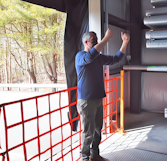
Dock Safety Net | People
Loading dock nets that are rated for up to 300 lbs. to keep people from falling.
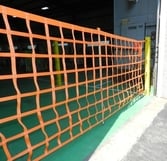
Dock Safety Net | Forklifts
Loading dock nets that are rated for up to 13,500 lbs. to retain forklifts.
Netting Safety Barriers
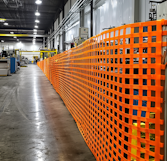
Barrier Safety Nets
SB-8000 Barrier fence nets for warehouses and factories to keep people away from areas.
Dock Barrier -- Visual

SB-3000 | Dock Barrier
This visual dock barrier is one of our most popular models with a span of up to 33cm

SB-2000 | Dock Barrier
This retractable dock barrier is made for openings larger than 33cm wide.

SB-4000 | Dock Barrier
NEW! This visual dock barrier is an economical solution for dock openings large and small.

SB-4000 | Portable Dock Barrier
This portable dock barrier fence can be moved around as needed and the base plate requires no anchoring. Perfect for quick deployment and making many barrier shapes around dock bay openings.
Common Questions
Are Dock Barriers Even Required?
To put this in context, falls from height and workplace transport — including forklifts and other powered industrial trucks — are consistently among the leading causes of serious and fatal accidents at work in the EU. Eurostat attributes close to a quarter of all fatal workplace accidents to the construction sector, and slips, stumbles and falls of persons account for hundreds of thousands of accidents across the EU each year. Loading docks sit right at the intersection of these two hazards. EurostatOSHwiki
As industry guidance from Grainger [link] points out, most loading-dock safety rules ultimately come down to how forklifts are operated and designed around the dock. Under EU law, forklifts are "work equipment" governed by the Use of Work Equipment Directive 2009/104/EC, with the design and safety requirements for the trucks themselves set out in the EN ISO 3691 series. Alongside this, the Workplace Directive 89/654/EEC requires employers to arrange workplaces — including loading bays, ramps and platform edges — so that workers cannot fall and vehicles cannot be driven over an exposed edge. In practice this means keeping a safe clearance from the edge of any elevated dock, ramp or platform. OSHwiki
Loading-dock safety nets support these obligations by acting as a physical barrier that extends beyond the dock or ramp edge — helping to stop or slow a forklift and clearly marking a safe working distance from the drop.
On the fall-prevention side, the EU Framework Directive 89/391/EEC and the work-at-height provisions of Directive 2009/104/EC require employers to prevent falls from height, giving priority to collective protection such as guardrails, edge-protection systems and safety netting. Temporary edge protection of this kind is designed to the harmonised standard EN 13374, whose Class A systems cover falls of up to 2 m and specify a minimum guardrail height of about 1 m together with a 1.0 kN/m distributed load and a 0.3 kN point-load resistance. Combi WorksFallAngel
Our dock netting is built to these criteria: its top rail sits at roughly 1.07 m (42 in) — above the 1 m minimum in EN 13374 Class A — and, when correctly installed, it provides multi-directional load resistance of about 1.33 kN (300 lbf, ≈ 136 kg) at the top rail, at the side points of the screen and at the anchoring points, comfortably beyond the 0.3 kN point load the standard specifies.

What Are the Advantages of Retractable Dock Barriers?
Unlike other barriers, our nets are flexible, which makes it very simple to put them away. They may be detached from one end and moved to the other to be neatly hooked until they are needed again. Our roll-ups, which are visual-only barriers, are less expensive than physical steel barriers and are also quicker to retract and deploy. Retractable net barriers for dock openings are also generally less expensive. Starting at a sale price of £905.00.
Why Dock Barriers Are Important
In order to maintain productivity and safety in warehouses, dock barriers are essential. By preventing falls from loading docks and shielding employees from machinery, they reduce the risk of accidents. By keeping out unwanted access and protecting merchandise from theft, these barriers also improve security. Dock barriers simplify loading and unloading procedures, increase organisation, and cut down on downtime by establishing limits and guiding traffic flow. They also protect items from damage by shielding operations from weather conditions like wind and rain. In general, dock barriers are necessary to keep a warehouse environment that is efficient, safe, and secure.
How are Dock Safety Nets and Retractable Dock Barriers Better Than Steel?
After installation, loading dock nets require little to no maintenance. In contrast to conventional metal forklift barriers, cross arms, or chains, the nets can bend when struck, absorbing and dispersing stress throughout the net. This typically indicates that the network system won't be harmed by modest impacts. Please keep in mind, the dock safety nets or visual barriers, should be evaluated for damage in accordance with your internal safety standards and especially following collisions. There's no need for costly on-site maintenance or repair services. It's as easy as that: just replace or repair the components as necessary.
Visual Dock Barricades Vs. Restraint Dock Barricades
In warehouses, the functions of restraint dock barricades and visual dock barricades differ. Visual dock barricades serve as visual indicators to notify workers of a dock's edge, improving awareness and minimizing unintentional falls. Examples of these barricades include safety chains and brightly colored tape. They offer little physical protection, but they are inexpensive and simple to install.
Restraint dock barricades, on the other hand, provide a physical barrier to stop falls or equipment from rolling off the dock. Examples of these barriers include safety nets and retractable gates. Because they physically halt movement, they offer stronger protection and are therefore appropriate for high-risk regions with heavy equipment traffic.
Are your barriers compatible with safety interlock systems?
Yes, all of our barriers, including the SB-4000 Retractable Barrier Fence, the SB-3000 Industrial Retractable Barrier, the SB-2000 Industrial Roll-Up Barricade, the SB-5000 Rolling Welding Curtains, and the SB-9000 Retractable Welding Screen, are fully compatible with third-party safety interlock hardware.
In factories, fabrication shops, and industrial facilities across Ireland, the UK, and mainland Europe, safety interlocks are standard compliance requirements. They ensure facilities meet strict machinery-safety obligations, including:
- The EU Machinery Directive 2006/42/EC (which will be superseded by Machinery Regulation (EU) 2023/1230 from 20 January 2027).
- The UK Supply of Machinery (Safety) Regulations.
- Workplace health and safety mandates like the Use of Work Equipment Directive 2009/104/EC (and PUWER regulations in the UK).
Under relevant harmonised and designated standards—in particular EN ISO 14119 for interlocking devices associated with guards and EN ISO 14118 for the prevention of unexpected start-up—interlocks serve as a critical layer of protection. They ensure machinery cannot operate while a barrier or guard is open, displaced, or removed.
While we do not supply safety interlocks ourselves, AKON's retractable barriers, industrial barricades, and welding screens are all engineered to work seamlessly with third-party interlock hardware that conforms to EN ISO 14119. This allows you to easily maintain compliance with European, Irish, and UK workplace safety laws without compromising your operational workflow.