

OVERVIEW
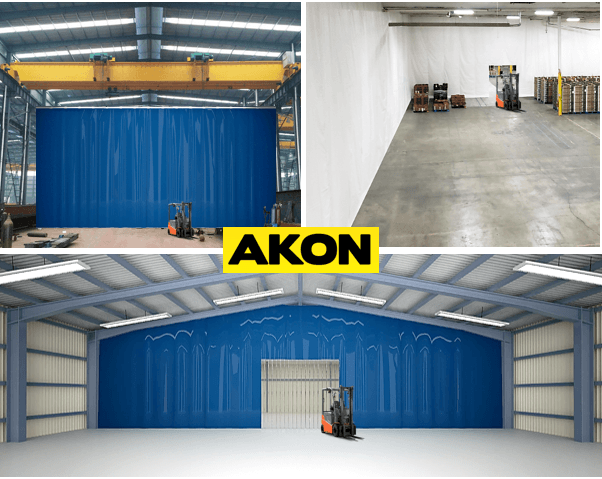
Our warehouse partitions are suited to a wide range of industrial applications. Thanks to their versatile design and durable vinyl construction, they can be adapted to meet many different site requirements. The most common uses include the following.
- Lower Energy Costs – Zone off heated or cooled areas from unoccupied sections of the building
- Humidity Management – Stop moisture-laden air from circulating throughout the facility
- Dust Control – Prevent airborne dust from spreading across your work area
- Odour Containment – Keep fumes and odours confined to a designated zone
Partition Your Warehouse Space
Considerations for Warehouse Partitions
Most businesses looking to divide their warehouse space will at some point consider a traditional fixed wall. While permanent walls have their place, they are rarely the most practical solution for industrial environments. Here is why they often fall short.
-
- Permanent walls involve a considerable upfront expenditure
- They typically require a planning permission or a building permit
- Once in place, they are extremely difficult to remove
- The installation process is time-consuming and disruptive
- Adapting or reconfiguring them at a later date is rarely straightforward
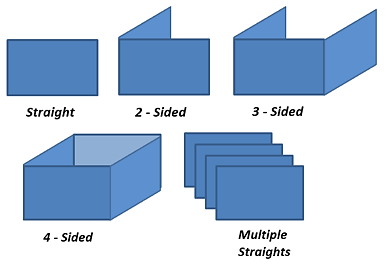
Any Layout For Your Needs
Complete Containment Solution
Section Off Your Warehouse
Benefits
A fixed load-bearing wall is seldom the most practical or cost-effective way to divide a warehouse. They are rigid, costly, and once installed they are very difficult to undo. Our Warehouse Curtain Partitions offer a far more flexible alternative.
-
- Affordable upfront cost
- In most cases they do not require planning permission
- Quick and simple to remove once no longer needed
- Fast to install with minimal disruption
- Easy to adapt or reconfigure as your requirements change
A growing number of warehouse and facilities managers across the UK have made the switch and found it to be one of the best decisions for their operation. With budgets under increasing pressure, our curtain partitions represent outstanding value.
Hanging Warehouse Partitions
Movable Curtain - Suspended Track
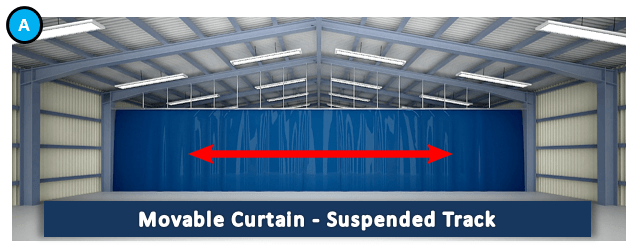
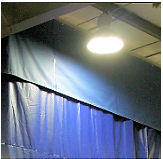
With this setup, the curtain track is mounted overhead and secured directly to the building structure. The dividing curtain slides smoothly from side to side along the track, allowing it to be moved almost completely clear of the opening whenever full access is required.
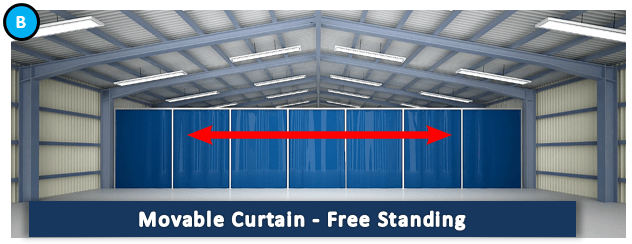
Movable Curtain - Free Standing
This configuration supports the curtain track at floor level using vertical upright posts rather than fixing to the overhead structure. The additional hardware makes it a costlier option, but it keeps the full height above the curtain completely accessible. It is the preferred choice where overhead fixing is not possible or practical.
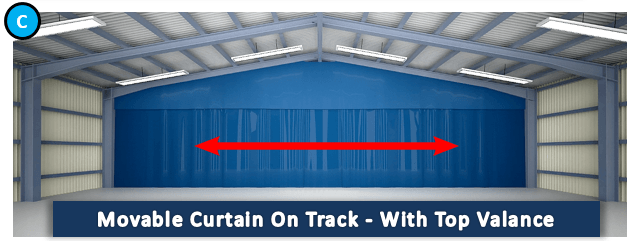
Movable Curtain On Track - With Top Valance
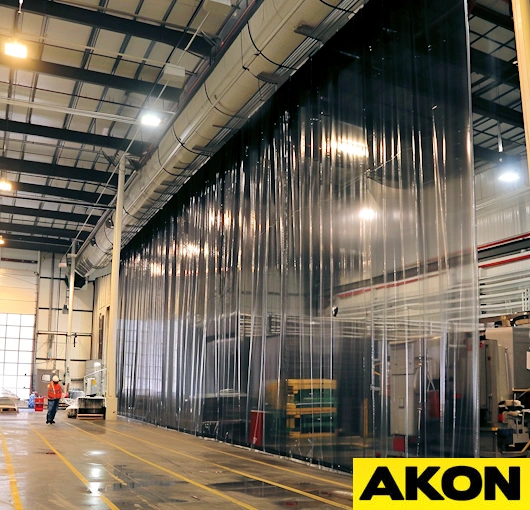
This option pairs either a suspended or freestanding curtain track with a fixed valance panel along the top of the opening. The valance provides an additional layer of separation across the upper section, making this configuration particularly effective for temperature zoning and dust control. The lower curtain slides open and closed for access, while the valance panel remains fixed in position.
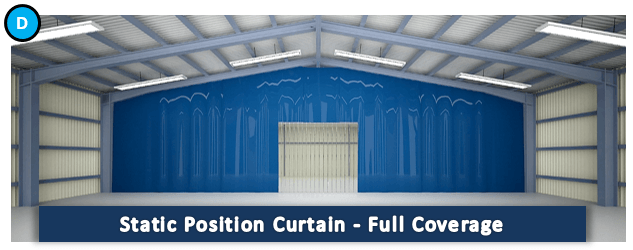
Static Position Curtain - Full Coverage
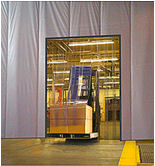
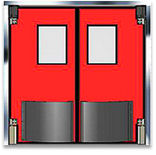
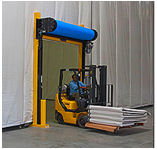
This option uses a single large curtain panel that is fixed at the top and remains stationary at all times. As it does not open or close, an integrated access point is typically required. The most common choices are a strip door, a roll-up door, or a swing door, each of which allows easy passage for both personnel and forklift traffic on either side.
Easy to Install
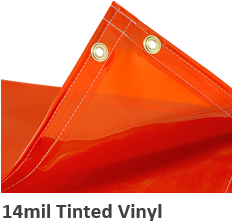
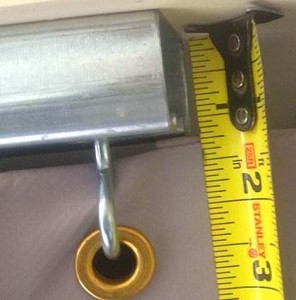
Each partition arrives pre-fitted with grommets along the top edge, allowing you to hang the curtain quickly and easily whether you are using a dedicated curtain track or not.
Cost Effective
Curtain partitions typically cost a fraction of what you would spend on rigid walls or modular panel systems, and they fold away for compact storage when not in use.
Separate Workers
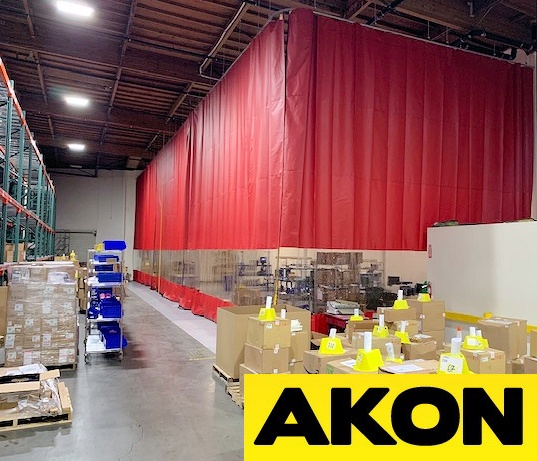
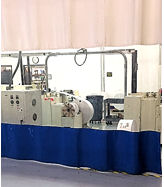
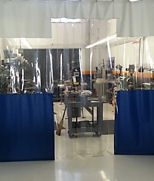
Our curtain partitions are well suited to creating distinct zones for workers carrying out different tasks, including welding, washing, packaging, assembly, and many other operations.
Control Noise
The heavy-duty PVC construction of our warehouse partitions provides effective sound dampening, helping to create a quieter and more productive working environment for your team.
Material Options
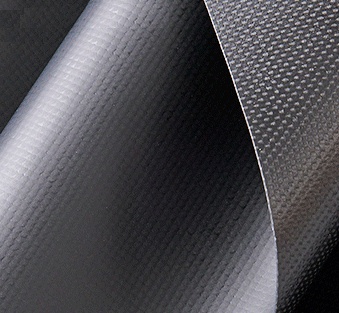
Opaque Vinyl
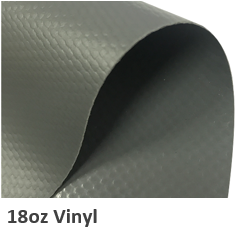
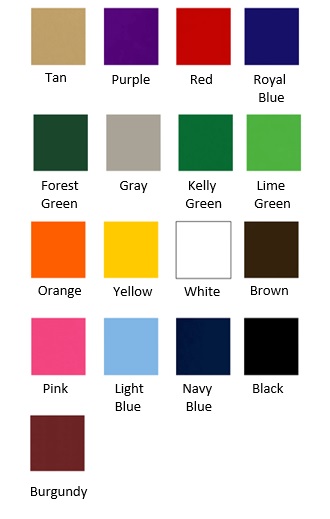
A heavy-duty 18oz opaque vinyl offering solid performance in moderate temperature environments while maintaining complete visual privacy between zones. €€
Clear Vinyl
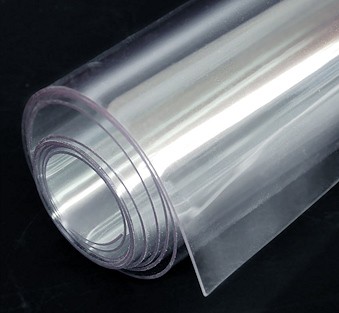
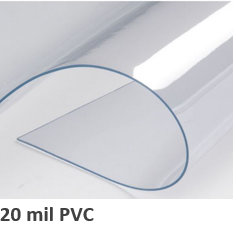
A robust 30mil clear vinyl panel that provides moderate thermal separation between areas while preserving full visibility across the divide. €€

Insulated Vinyl
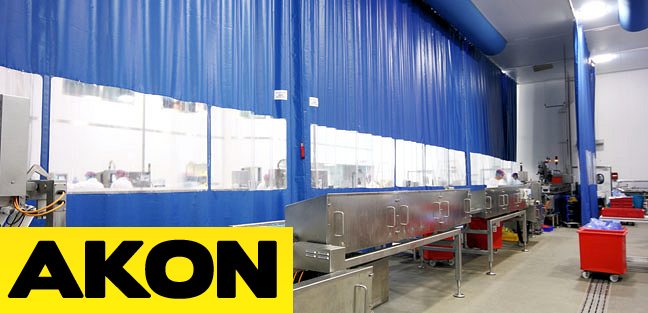
Industrial-grade insulating panel with an R3 thermal rating and 13mm total thickness, constructed with 18oz vinyl outer skins. The ideal choice for demanding temperature control applications where visual separation is also required. €€
Common Questions
How do you partition a warehouse?
The most practical way to partition a warehouse is with industrial curtain walls. AKON's warehouse partition curtains hang from a ceiling-mounted or freestanding track system and can be configured to divide virtually any space. The curtains are available in insulated vinyl, opaque vinyl, and clear vinyl, allowing you to choose the right level of thermal performance and visibility for your needs. Installation is straightforward — curtains come pre-fitted with grommets and can be hung in a matter of hours rather than days. Unlike fixed walls, they require no planning permission in most cases, can be repositioned as your needs change, and are just as easy to remove as they are to put up.
What are the three types of partitions?
The three main types of warehouse partition are rigid walls, modular panel systems, and flexible curtain partitions. Rigid walls are permanent load-bearing structures built from brick, block, or stud — durable, but expensive, permit-dependent, and very difficult to modify. Modular panel systems sit in the middle ground; they can be dismantled but still involve significant cost and installation time. Flexible curtain partitions, such as AKON's vinyl warehouse curtains, are the most versatile option. They hang from a track, require no groundwork or planning permission in most cases, can be moved or removed in minutes, and cost a fraction of what either alternative would involve — making them the preferred choice for most UK industrial settings.
How much does a partition usually cost?
The cost of a warehouse partition varies considerably depending on the type you choose. Permanent fixed walls are the most expensive option, often requiring structural work, building permits, and specialist contractors. Modular panel systems are cheaper but still carry a meaningful upfront investment. Flexible vinyl curtain partitions, like those offered by AKON Curtains, are by far the most cost-effective solution — typically costing around a third of what rigid alternatives would involve. Pricing depends on the width and height of the opening, the material selected, and whether a track system is required. AKON offers a straightforward online configurator and quote system to help you get an accurate price for your specific requirements quickly and without obligation.
What is the purpose of a partition?
The purpose of a warehouse partition is to divide a large open space into smaller, more manageable zones without the need for permanent construction. Partitions are commonly used to control temperature — keeping heated or cooled air within a defined area — as well as to manage dust, contain fumes, reduce noise, and separate workers carrying out different operations. They also help businesses use their space more efficiently by sectioning off storage areas, production zones, or clean rooms from general warehouse activity. AKON's vinyl curtain partitions are designed for heavy industrial use and can be configured to suit virtually any warehouse layout, with a choice of materials, access options, and track systems to match your exact requirements.
What are the risks of partitioning?
When it comes to partitioning a warehouse, the main risks are associated with choosing the wrong method rather than partitioning itself. Permanent walls carry the risk of being costly to modify or remove if your operational needs change, and installing them without the correct permits can create legal and insurance complications. Even flexible curtain systems carry some considerations — they must be correctly specified for the environment, as an underweight material in a high-traffic area will wear quickly. Fire safety is also a key factor; AKON's warehouse partition curtains are manufactured to meet relevant fire ratings, helping you remain compliant. Choosing a reputable supplier with clear product specifications is the best way to manage risk from the outset.
What are the reasons for partitioning?
There are many practical reasons why a business might choose to partition their warehouse. Temperature management is one of the most common — separating a refrigerated zone from an ambient area, or retaining heat in a section of the building during winter. Dust and fume containment is another key driver, particularly where sanding, welding, painting, or chemical handling takes place. Businesses also partition to create dedicated workstations, improve safety by separating forklift routes from pedestrian areas, reduce noise pollution across the facility, and maintain cleaner environments for food production or pharmaceutical storage. AKON's curtain partition systems can be tailored to address any of these requirements, with material and configuration options to suit each specific application.
What are the two types of partitioning?
In a warehouse context, the two broad categories of partitioning are fixed partitions and movable partitions. Fixed partitions are static structures — typically walls or bolted panel systems — that remain in place permanently once installed. They offer a high degree of separation but are costly to install and very difficult to reconfigure. Movable partitions, such as AKON's sliding curtain systems, offer considerably greater flexibility. The curtains can be opened fully to one side when access is needed, repositioned on the track, or removed entirely. This makes them ideal for warehouses where space requirements change regularly, or where the full width of an opening needs to be cleared for deliveries, maintenance, or seasonal changes in layout.
What are the main causes of partitioning?
The main drivers behind a decision to partition a warehouse are operational efficiency, environmental control, and worker safety. As a facility grows or its use changes, the need to divide the space into distinct zones becomes more pressing. Temperature differentials between different parts of the building — particularly in food, pharmaceutical, or manufacturing environments — are a common trigger. Dust and fume migration from production areas into storage or office spaces is another. Noise management, separating hazardous processes, and creating cleaner or more controlled environments for specific tasks all contribute to the decision. AKON's warehouse curtain systems provide effective industrial-grade separation that can be installed quickly and adapted as your requirements evolve.
What are some examples of partitioning?
There are many practical examples of warehouse partitioning in use across UK industries. A food manufacturer might use insulated vinyl curtains to separate a refrigerated packing area from the main warehouse floor. An automotive workshop could install opaque vinyl curtains to enclose a spray painting booth and contain fumes. A logistics company might divide a large distribution shed into temperature zones to protect goods from cold draughts near loading bay doors. A manufacturer might use clear vinyl curtains around a clean room area, maintaining visibility while keeping dust out. AKON's curtain systems are used across welding facilities, wash bays, agricultural buildings, and fabric structures, demonstrating just how broadly a well-specified curtain partition can be applied.
What is a partition in simple words?
In simple terms, a warehouse partition is a dividing curtain or wall that splits a large open space into two or more separate areas. It works in the same way as a room divider, but is built to handle the demands of an industrial environment. AKON's warehouse partitions are made from heavy-duty vinyl and hang from an overhead track or freestanding frame, making them easy to open, close, or remove as needed. They are used to keep heat in, dust out, noise down, or simply to separate different types of work happening in the same building. Unlike a permanent wall, a curtain partition can be adjusted or taken down without any building work, making it a highly practical solution for any warehouse or industrial unit.
What are the three partitions?
The three main partition types used in warehouse and industrial settings are hard wall partitions, wire mesh partitions, and curtain partitions. Hard wall partitions are permanent structures offering the highest degree of separation and security, but they are expensive and inflexible. Wire mesh partitions are commonly used for security caging and pallet storage areas, providing physical separation while maintaining airflow and visibility. Curtain partitions, such as AKON's industrial vinyl warehouse curtains, are the most flexible of the three — they can be opened fully, partially, or closed completely, and are available in insulated, opaque, and clear vinyl to suit a wide range of applications. For most warehouses, curtain partitions offer the best balance of cost, practicality, and versatility.
What are the benefits of partitioning?
Partitioning your warehouse delivers a range of measurable benefits that quickly justify the investment. Thermal efficiency is one of the most immediate — by zoning heated or cooled areas, businesses can significantly reduce their energy bills. Dust and fume containment protects both workers and products, improving health and safety compliance. Noise reduction across different work areas creates a more comfortable and productive environment. Partitions also improve organisation by clearly defining storage zones, production areas, and throughways. Unlike permanent walls, AKON's curtain partition systems are fast to install, do not require planning permission in most cases, and can be easily modified or relocated. They represent outstanding value for UK businesses looking to get more from their existing warehouse space.
Entry Points In the Partition
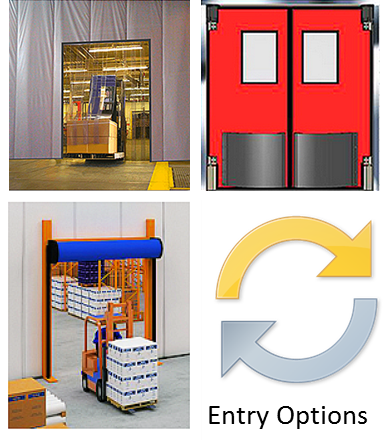
Entry Options
For large static curtain installations where the panels are not designed to slide open, built-in access points are an important consideration. These entry openings allow personnel and goods to move through the curtained area quickly and with minimal effort. The most frequently specified options are strip curtains, hinged swing doors, and powered roll-up doors — with strip curtains being the most widely used and cost-effective solution. All entry configurations include a freestanding frame that anchors to the floor and forms a seal against the curtain panel.
Photo Gallery
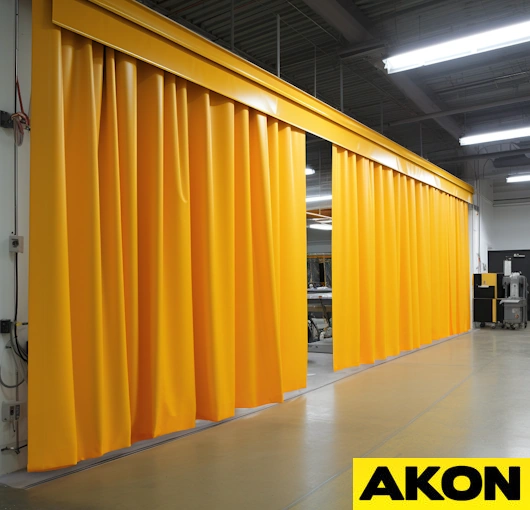
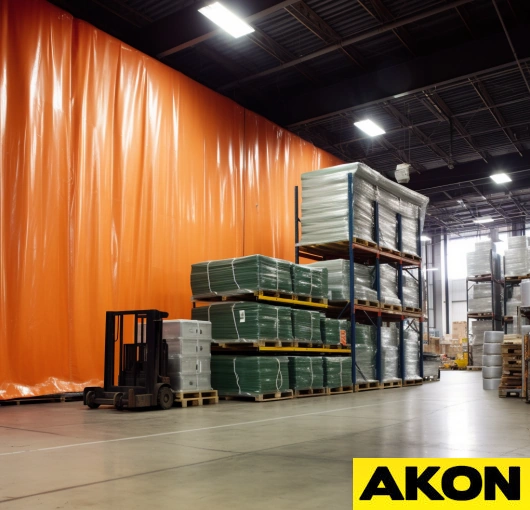
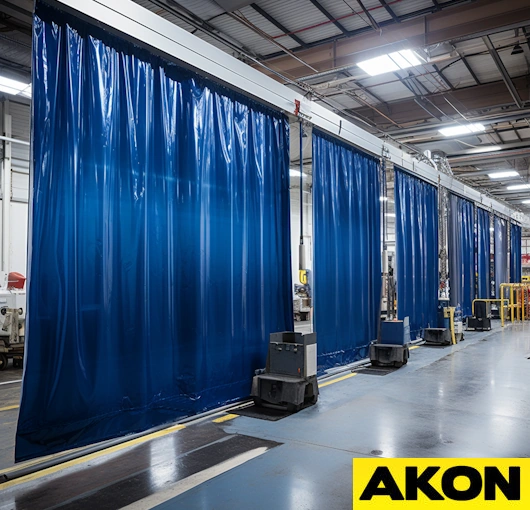
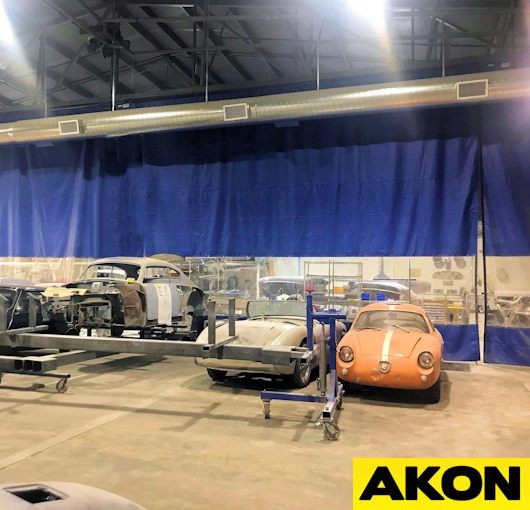
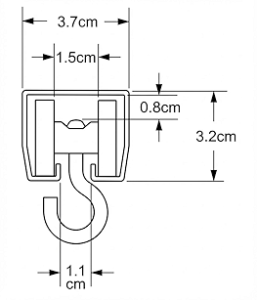
Curtain Track
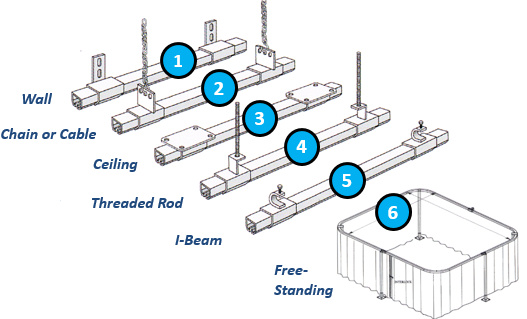
- 16-gauge galvanized steel tracks
- Nylon roller hooks for easy opening
- 6 mounting styles to connect to various structures
- Free-standing hardware for heights up to 5 m
Static Mount Hardware
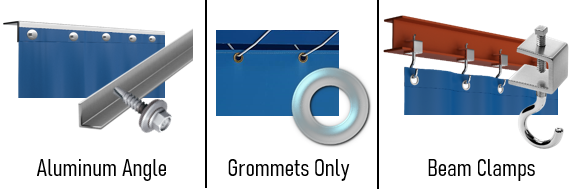
- Aluminum Angle - Use with self-tapping Tek screws to pinch the curtain to the angle.
- Grommets Only - You can then use many DIY methods to hang the curtains.
- Beam Clamps - Clamps onto the flange of beams, joists, and purlins.

Build Yours Online
This is hidden from customers. It contains Google code (Service & FAQ).
If you duplicate this page, remember to update the text inside!