

Key Takeaways
- Machine guarding curtains contain high-velocity projectiles, including metal chips, grinding sparks, and broken tool fragments, protecting operators within arm's reach of CNC lathes, grinders, and brake presses.
- Steel mesh stops heavy, sharp debris; vinyl provides visibility and moderate impact resistance. Our complete guide to steel mesh safety curtains explains which material suits each application.
- OSHA Standard 1910.212 requires effective guarding on every machine part, function, or process that can cause injury. Non-compliance risks fines exceeding £10,000 per violation.
- Made-to-measure curtains install in under a day using 16-gauge galvanised steel tracks and heavy-duty roller trolleys, minimising production downtime.
Updated: March 2026
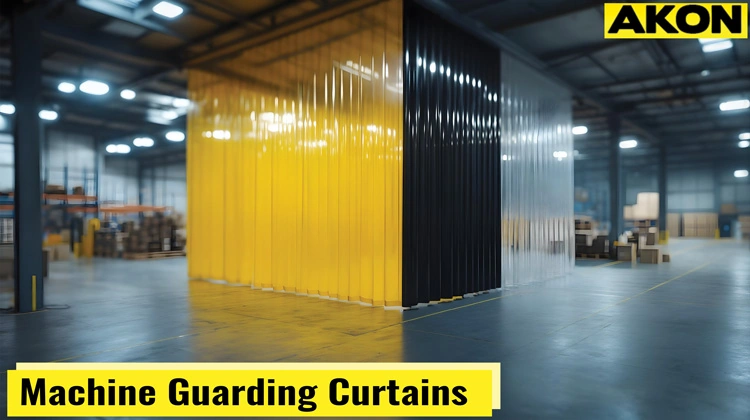
Machine guarding curtains stop flying debris before it reaches your operators. We fit hundreds of these barriers every year across UK and Irish manufacturing facilities.
In machine shops and production halls, CNC lathes, grinders, brake presses, and milling centres throw off metal chips, broken tool bits, and grinding sparks at velocities that can cause serious injury. Our projectile containment curtains create a flexible, retractable barrier around the hazard zone, keeping workers safe while preserving the visibility and access they need to do their jobs.
Whether you choose heavy-duty steel mesh or 18 oz vinyl, every curtain we supply meets OSHA Standard 1910.212 and NFPA-701 fire-retardancy requirements. Below, we break down the options, compare materials side by side, and walk you through costs, installation, and compliance.
Why Machine Guarding Curtains Protect Your Workforce
A single unguarded lathe can launch a metal chip at over 61 m/s, and machine guarding curtains absorb that energy and keep it away from your people.
Every year, OSHA records thousands of injuries linked to flying debris in machining environments. Rigid enclosures solve part of the problem, but they restrict airflow, block sightlines, and slow down changeovers. Curtain-based barriers deliver the same containment in a flexible, retractable format that operators actually leave in place because it doesn't interfere with their workflow.
In our experience, facilities that switch from fixed guards to curtain systems see a measurable reduction in near-miss incidents within the first quarter and report faster machine access during tool changes.
"We replaced rigid polycarbonate screens on four CNC lathes with steel mesh curtains last April. Within three months, our near-miss reports dropped by 62%, and our operators said changeover time fell by roughly 8 minutes per shift because they no longer had to unbolt panels."
- David Holroyd, Health & Safety Lead, Pennine Precision Engineering Ltd
Understanding Projectile Risks in Manufacturing
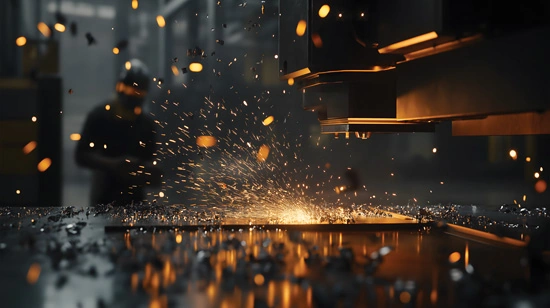
Metal chips, broken inserts, grinding sparks, and workpiece fragments are the four most common projectile hazards in machining environments.
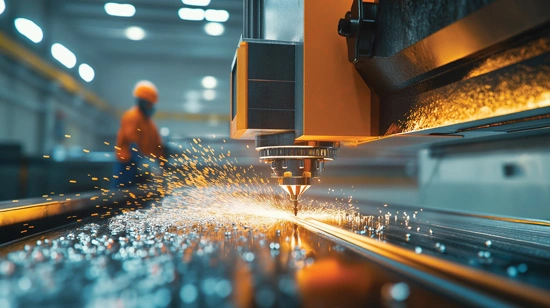
Machines generate high-speed debris in predictable ways. Lathes eject long, curled swarf and the occasional snapped carbide insert. Grinders produce showers of hot sparks and abrasive particles. Brake presses can fling off-cuts sideways. CNC milling centres combine all of these risks at spindle speeds that amplify launch velocity.
Without a containment barrier, this debris travels in unpredictable arcs across the shop floor. Workers operating adjacent machines, walking nearby, or even standing several metres away can sustain lacerations, eye injuries, and burns. A structured risk assessment (mapping debris types, trajectories, and velocities for each machine) is the first step toward selecting the right curtain material and mounting configuration.
Types of Machine Guarding Curtains for Projectiles
Steel Mesh | Machine Guarding Curtains
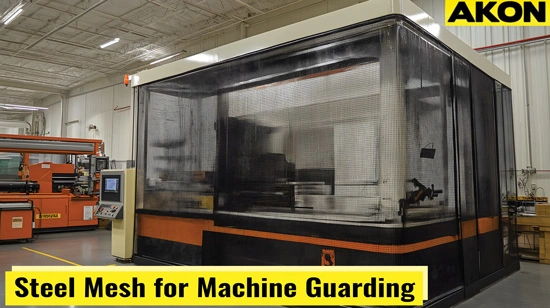
Steel mesh is the material of choice when your machines throw large, sharp, or heavy debris at high velocity.
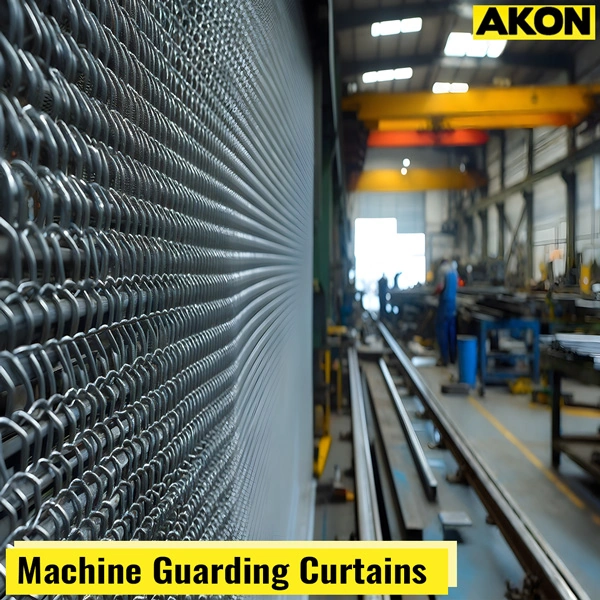
Woven from high-tensile galvanised wire, steel mesh curtains absorb kinetic energy through controlled deformation. They excel around lathes, grinders, and brake presses where broken tool inserts, metal shards, and heavy swarf pose the greatest risk. The open-weave structure maintains airflow and partial visibility while delivering puncture resistance that vinyl cannot match.
Our steel mesh panels hang from 16-gauge galvanised steel tracks and glide on heavy-duty roller trolleys, so operators retract them in seconds for tool changes and maintenance.
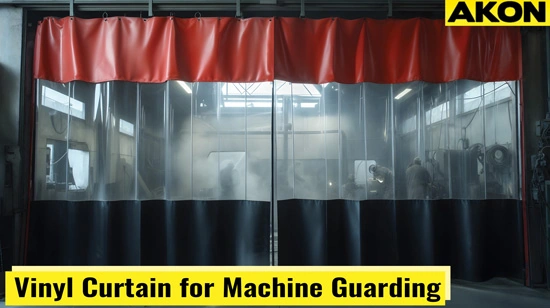
Vinyl | Projectile Resistant Safety Curtains
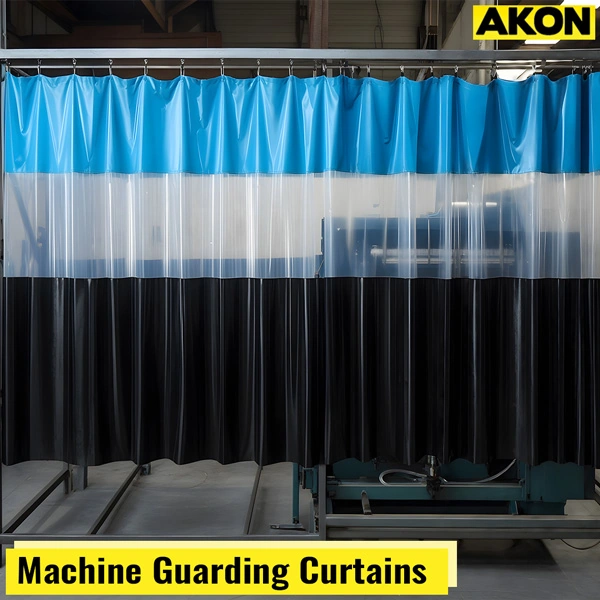
Heavy-duty 18 oz vinyl curtains combine clear sightlines with effective containment for small-to-medium debris.
Vinyl panels absorb impacts from metal chips, light swarf, and sparks without shattering. Clear or tinted sections give operators an unobstructed view of the machining process, which is critical for CNC work where real-time visual monitoring reduces scrap rates. The material is inherently fire-retardant to NFPA-701 standards and wipes clean with a damp cloth.
Because vinyl weighs significantly less than steel mesh, it suits applications where curtains need to be opened and closed frequently, including welding bays, packaging lines, and multi-machine cells that require rapid reconfiguration.
Curtains to Stop Flying Debris: What Makes Them Effective?
Material Strength
High-tensile steel mesh or heavy-duty 18 oz vinyl ensures maximum durability against high-velocity debris.
Transparency
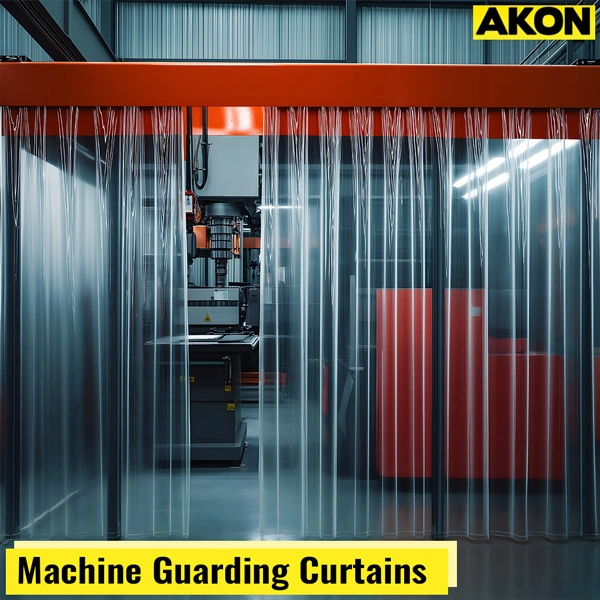
Clear vinyl or mesh designs allow operators to maintain full visibility while ensuring projectile safety.
Flexibility
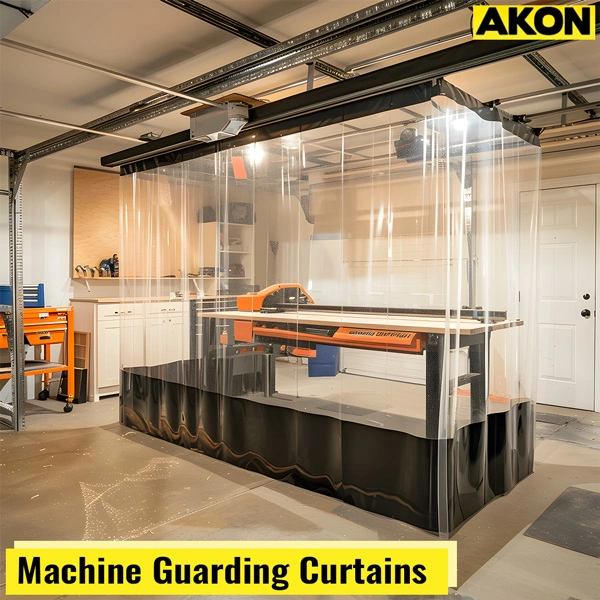
Every curtain is tailored to fit your equipment and workstations precisely, maximising protection.
Which Material Is Right For You?
Vinyl vs. Steel Mesh
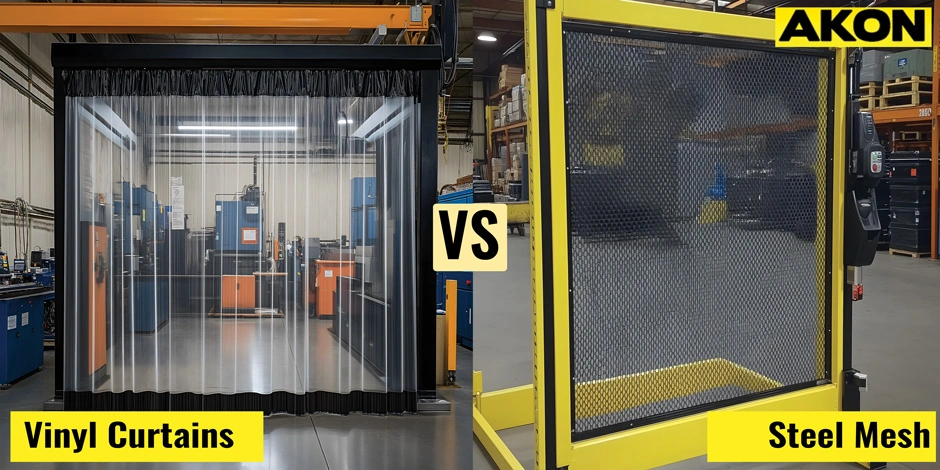
| Criteria | Vinyl Curtains | Steel Mesh Curtains |
|---|---|---|
| Best Debris Type | ✓ Small to medium chips, light sparks, fine swarf | ✓ Large, sharp, or heavy projectiles: broken inserts, heavy swarf, off-cuts |
| Impact Resistance | ✗ Moderate. Absorbs low-to-mid velocity impacts | ✓ High. Withstands high-velocity and repeated strikes |
| Operator Visibility | ✓ Excellent. Clear or tinted panels for full sightline | ✗ Partial. Open-weave mesh allows some visibility |
| Durability | ✗ Flexible, easy to replace; vulnerable to cuts and punctures | ✓ Extremely durable; resistant to piercing, cutting, and heat |
| OSHA 1910.212 Compliance | ✓ Compliant when properly rated and installed | ✓ Often preferred for high-hazard compliance scenarios |
| Typical Cost | ✓ £150–£400 per panel. Lower upfront, quick to swap | ✗ £300–£800 per panel. Higher upfront, longer service life |
| Installation Speed | ✓ Under 2 hours per machine with grommet-and-track system | ✗ 2–4 hours per machine; heavier hardware requires secure mounting |
| Maintenance | ✓ Wipe clean; replace panels every 2–3 years under heavy use | ✓ Inspect welds and weave integrity quarterly; panels last 5–10 years |
Steel Mesh
Benefits
Better Airflow
Steel mesh curtains allow proper air circulation, preventing heat and fume build-up around machines.
Quick Operation
Sliding or rolling track systems make these curtains simple to open and close for rapid machine access.
Many Applications
Steel mesh works as safety barriers, area partitions, and machine enclosures across diverse industrial settings.
Meet Regulations
Designed and built to comply with OSHA 1910.212 and ANSI B11.19 safety standards for machine guarding.
Applications
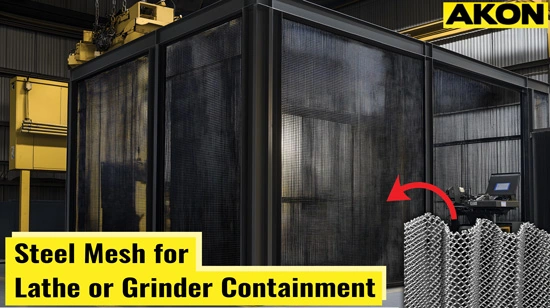
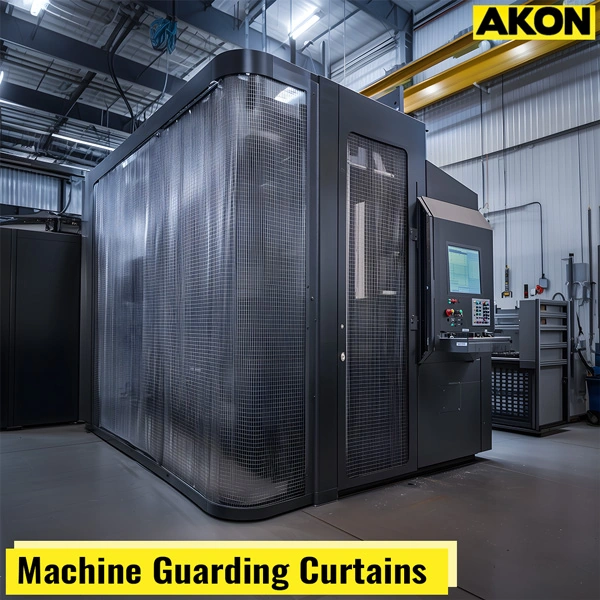
Containment Curtains for Lathe or Grinder Projectiles
Lathes and grinders produce high-speed metal chips and hot sparks that travel unpredictably. steel mesh curtains contain this debris at source.
Our steel mesh panels mount directly to the machine frame or overhead track, creating a wrap-around enclosure that catches swarf, broken inserts, and grinding particles. The open weave preserves airflow to prevent coolant mist build-up. Bespoke sizing ensures no gaps at corners or floor level.
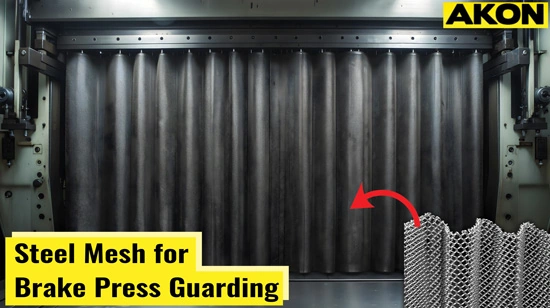
Brake Press Guarding: Why Steel Mesh Works
Steel mesh stops flying off-cuts and metal fragments ejected during brake press operations while maintaining the operator sightline.
Brake presses generate sudden lateral forces that can fling off-cuts across the shop floor. Mesh curtains positioned around the press absorb these impacts through controlled deformation. Unlike solid barriers, the mesh lets operators see the workpiece throughout the forming cycle, reducing positioning errors and scrap.
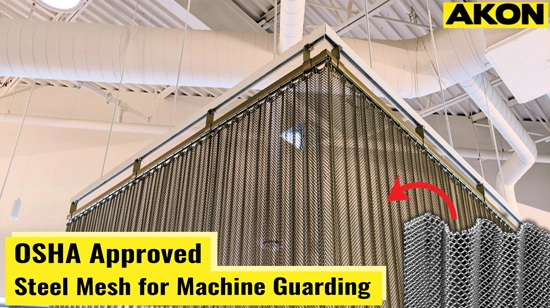
OSHA Approved for Flying Projectiles
Steel mesh guards meet OSHA Standard 1910.212 and ANSI B11.19-2003, keeping workers safe around high-risk machines.
The wire curtains stop flying pieces from hitting people if something breaks or comes loose from the machine. The mesh design lets workers see what they are doing while staying protected. They contain debris inside the work area and prevent injuries that lead to costly downtime and compensation claims.
Vinyl
Vinyl Curtain Benefits
Easy Install
Built-in grommets enable quick installation with or without tracks, making them an ideal low-maintenance guarding solution.
Inexpensive
At roughly one-third the cost of rigid walls, vinyl curtains offer an economical and space-efficient machine guarding option.
Separate Workers
Versatile vinyl curtain walls safely separate workers from machinery during welding, washing, packaging, and more.
Control Noise
Thick PVC composition significantly reduces noise transmission from machinery, creating a more comfortable work environment.
Applications
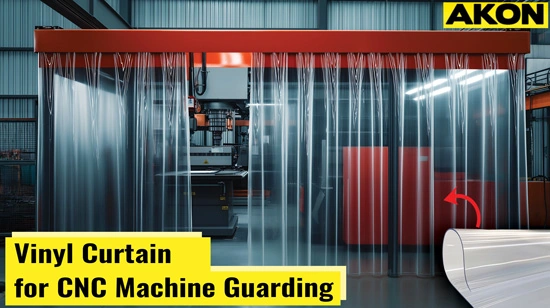
CNC Machine Cover
Clear vinyl curtains give CNC operators an unobstructed view of the cutting process while containing chips and coolant spray.
CNC work demands constant visual monitoring of tool engagement, chip flow, and coolant delivery. Vinyl panels provide that visibility without the rigidity of polycarbonate doors. They retract instantly for tool changes, programme adjustments, and workpiece loading, then slide back into position in seconds.
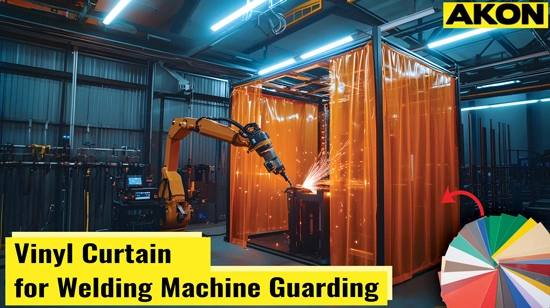
Welding Machine Guarding
Fire-retardant vinyl curtains block UV radiation, contain spatter, and protect adjacent workers from welding hazards.
Welding generates intense UV light, molten spatter, and toxic fumes. Our vinyl welding curtains, available in amber, green, and dark-tinted grades, absorb harmful wavelengths while containing sparks within the welding bay. They conform to NFPA-701 fire-retardancy standards and adapt to oddly shaped spaces that rigid screens cannot accommodate.
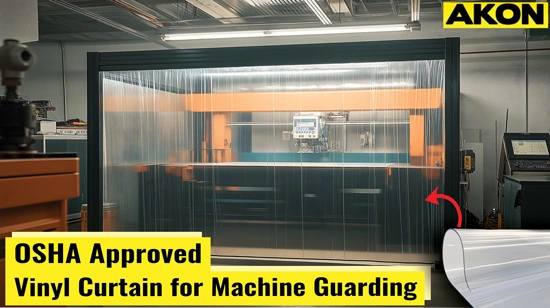
OSHA Approved Guarding for Flying Projectiles
OSHA has stringent guidelines concerning workplace safety, specifically machine guarding requirements under OSHA Standard 1910.212.
Machine guarding curtains for projectiles must effectively contain hazards, protect workers, and be durable enough to withstand regular impact. Using OSHA-approved guarding solutions ensures compliance, reduces injury risks, and potentially lowers insurance premiums and workplace incidents.
How to Protect Workers from Flying Machine Parts
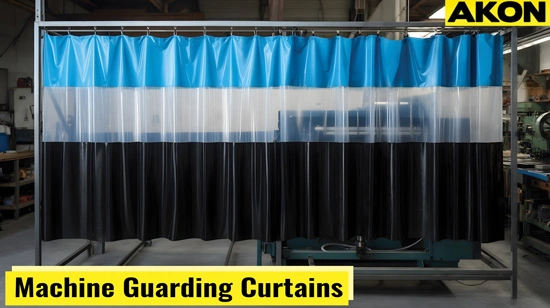
Effective projectile protection combines a structured risk assessment, the right barrier material, correct installation, and ongoing inspection. Protecting workers from flying machine parts involves a multi-faceted approach:
- Assessment and Planning: Evaluate the types of machines and potential projectile risks. Map debris types, trajectories, and velocities for each machine in your facility.
- Selecting Proper Barriers: Choose the most suitable curtain (vinyl vs. steel) based on your specific needs. Our steel mesh safety curtains guide helps you compare options for high-impact environments.
- Proper Installation: Curtains must be installed strategically around machines. Overlap panels by at least 150 mm at joints, anchor sides with industrial-strength Velcro or magnetic seals, and add weighted chain hems at the bottom to prevent wind lift.
- Regular Inspection and Maintenance: Schedule quarterly inspections. Check mesh weave integrity, vinyl surface condition, track roller movement, and seal adhesion. Replace any panel that shows punctures, tears, or heat damage.
Impact-Resistant Curtains
Impact-resistant curtains offer a balance between robust protection and operational convenience.
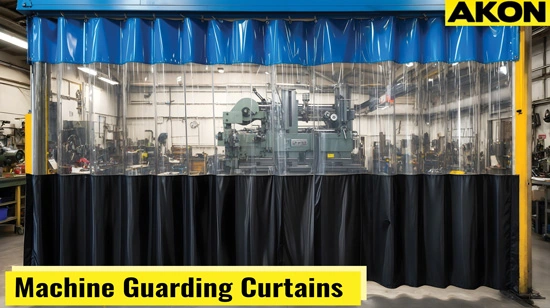
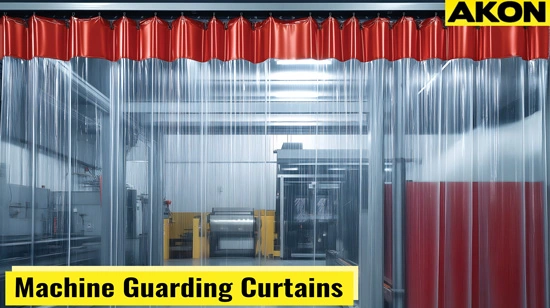
These curtains are engineered to withstand high-velocity impacts, making them ideal for environments like CNC machining centres or metal machining operations. They serve as an effective solution to safeguard workers from flying debris without hindering operational visibility or accessibility.
Bespoke Safety Curtains for Metal Machining: Tailored Protection
We cut every curtain to your exact machine dimensions. no stock sizes, no compromises on containment coverage.
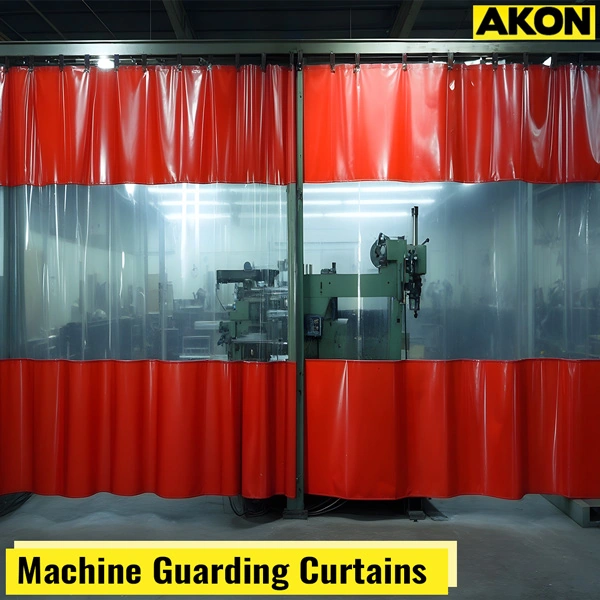
Tailoring of safety curtains is key to maximising effectiveness. Machine guarding curtains can be made-to-measure, shaped, and configured to match the unique demands of different manufacturing setups. Reinforced hems for high-impact zones, transparent viewing windows, magnetic closure strips, and colour coding are all available. Lead time on bespoke orders is typically 5–10 working days from sign-off to dispatch.
Frequently Asked Questions about Machine Guarding Curtains for Projectiles
What projectile speeds can machine guarding curtains withstand?
Steel mesh curtains contain debris travelling at velocities typical of CNC lathes and grinders, generally up to 61 m/s. Vinyl curtains handle lower-velocity chips and sparks effectively.
How do I choose between steel mesh and vinyl curtains?
Choose steel mesh for heavy, sharp, or high-velocity projectiles. Choose vinyl when operator visibility is essential and the debris is small to medium-sized, such as light swarf and sparks.
Are machine guarding curtains compliant with OSHA 1910.212?
Yes. Both steel mesh and rated vinyl curtains satisfy OSHA 1910.212 requirements when properly selected for the hazard level and installed with full coverage around the machine.
How long does installation take per machine?
A single-machine curtain enclosure typically installs in 2–4 hours using our pre-punched track-and-trolley system. Most facilities complete a full-day rollout across several machines.
Can the steel tracks be cut to size on site?
Yes. Our 16-gauge galvanised steel tracks are field-adjustable and can be trimmed on site with a standard hacksaw or power saw for a precision fit.
What is the gap between the track and the top of the curtain?
We maintain a standard gap of approximately 2–2.5 cm so the heavy-duty roller trolleys glide smoothly without the material binding, even with thicker vinyl or mesh panels.
Are the curtain materials fire-retardant?
Yes. All our vinyl and mesh materials meet NFPA-701 fire-retardancy standards, which is essential in environments where sparks or hot projectiles are present during machining.
How do you secure curtains during high-impact operations?
We use industrial-strength Velcro or magnetic side seals to anchor curtains to the machine frame, combined with weighted chain hems at the bottom to keep panels stable under projectile forces.
Photo Gallery
Conclusion
When selecting the best machine guarding curtain, consider your specific application. Choose steel mesh if you need maximum strength for high-impact environments where sharp or heavy projectiles are a risk. Opt for vinyl with clear panels if visibility and moderate protection are your priorities, especially in areas with lower-speed debris.
For applications that need both visibility and strength, a hybrid curtain may be the best solution. If you are unsure which option fits your needs, our team is here to help you find the right machine guarding curtains for projectiles.
Need Machine Guarding Curtains for Your Facility?
We design, manufacture, and install bespoke projectile containment curtains for CNC lathes, grinders, brake presses, and welding bays across the UK and Ireland. Call us today for a free site assessment and quote or click below to build it now.
Build Yours Online
Vinyl Curtains
Steel Mesh Curtains
About the Author
James Whitfield is Technical Sales Manager at AKON Curtains Limited. With over 12 years in industrial barrier solutions, James advises manufacturing and engineering clients across the UK and Ireland on machine guarding, workspace separation, and regulatory compliance. He can be reached at +353 (0)21 203 2051.
This is hidden from customers. It contains structured data (BlogPosting, FAQPage & Organization).
Do not edit unless you understand JSON-LD schema markup.